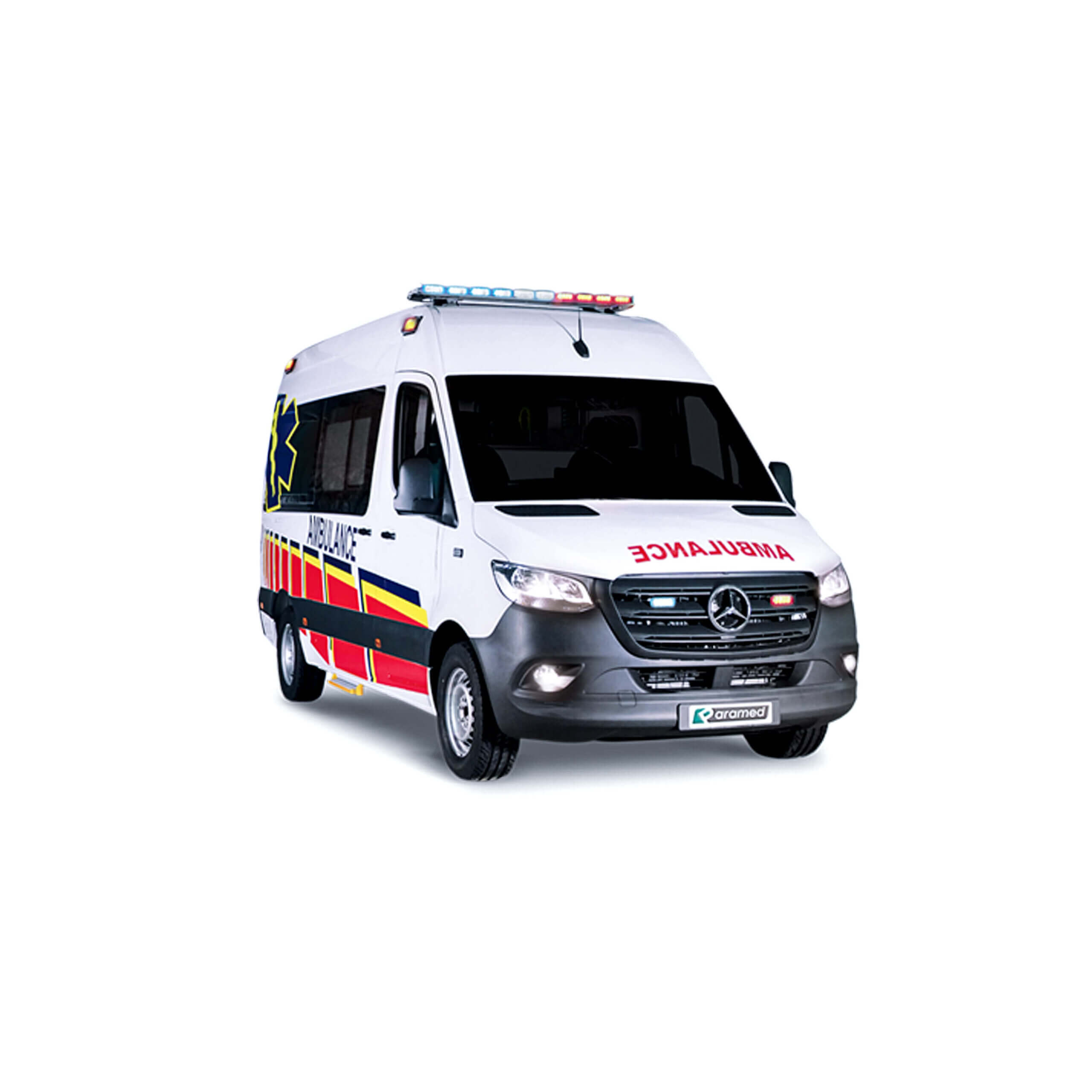

Home / Advanced Life Support Ambulance (ALS)

Advanced Life Support Ambulance (ALS)

ALS ambulances are designed for the transport of critically ill patients, providing advanced medical intervention and continuous intensive care during transit.

Function

Used for emergency response and inter-hospital transfers requiring ventilators, advanced monitoring, defibrillation, and life-support systems, typically operated by paramedics or medical doctors.

Standards

EN 1789 / GSO 1789 – Type C (Mobile ICU)
KKK-A-1822F (U.S. Standard) – Type II (where applicable)

Available Chassis

Used for emergency response and inter-hospital transfers requiring ventilators, advanced monitoring, defibrillation, and life-support systems, typically operated by paramedics or medical doctors.

Ambulance Engineering & Manufacturing Process

Structural Engineering

The vehicle body structure is reinforced to ensure durability, safety, and long-term integrity, with additional reinforcements applied where required.

Electrical Systems Integration

The electrical infrastructure is installed, including structured wiring, control units, and communication networks, forming the core technical backbone of the vehicle.

Insulation & Protection

Thermal and acoustic insulation is applied, along with protective treatments, to protect systems and ensure resistance to corrosion, moisture, and harsh environments.

Interior Build

Walls, ceilings, and flooring are constructed using durable, hygienic materials with anti-slip and easy-to-clean finishes, suitable for medical environments.

Cabinetry & Storage

Cabinet systems are installed to provide durable, hygienic, and efficiently organized storage, adapted to project-specific requirements.

Layout & Climate Systems

The interior layout is finalized to ensure efficient workflow and safe access, while climate systems maintain controlled temperature and airflow within the vehicle.

Lighting Systems

Interior, exterior, and emergency lighting systems are installed and configured to ensure visibility, safety, and operational readiness.

Medical Equipment Integration

Medical systems—including stretcher units, oxygen supply, suction systems, and mounted equipment—are securely integrated for safe and efficient operation.

Design & Livery Customization

Exterior and interior design elements are applied to align functionality with a clear visual identity, including branding, color schemes, and reflective markings based on client requirements.

System Programming & Control

All systems are programmed and calibrated to ensure proper functionality, coordination, and operational logic.

Testing & Validation

Each vehicle undergoes comprehensive testing to verify system performance, safety, stability, and reliability prior to delivery.